
Introduction
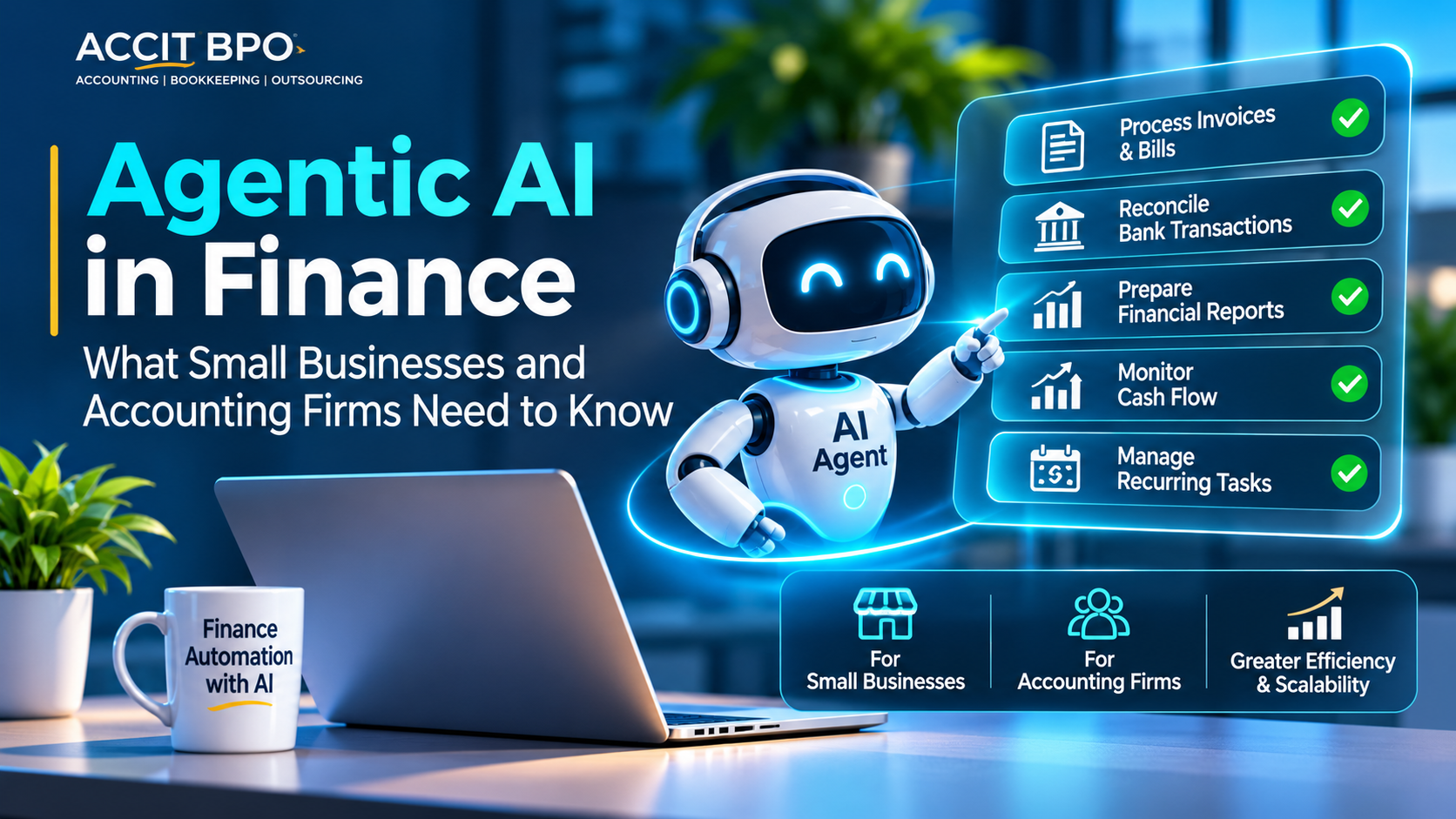
The next stage of finance automation is moving from tools that simply suggest an answer to AI agents that can carry out a sequence of tasks across connected systems. In finance, an agent might gather invoice details, check a purchase order, prepare a draft bill, identify a missing approval and notify a team member. This is often described as agentic AI.
The opportunity is significant, but so is the need for control. Financial workflows involve money, confidential data, regulatory obligations and records that must be traceable. Businesses should treat AI agents as controlled participants in a process, not as unsupervised replacements for financial responsibility.
How agentic AI differs from traditional automation
Traditional rules-based automation follows pre-set instructions: for example, route invoices from a named supplier to a particular approver. Generative AI can interpret less structured information and produce summaries or suggestions. Agentic systems may combine tools and steps to pursue a defined objective, such as preparing a payable item and requesting approval.
The degree of autonomy varies widely. Some products only prepare drafts; others may be able to take actions when permissions allow. Always check the actual product capability and its approval settings.
Potential finance use cases
- Invoice intake: extract invoice details and check whether required fields are present.
- Accounts payable: compare invoice data with purchase orders and flag exceptions.
- Receivables: prepare reminders based on agreed collection rules.
- Reconciliation: propose matches and assemble unresolved-item lists.
- Month-end: collect schedules, identify missing reconciliations and prepare status summaries.
- Management reporting: explain movements and draft commentary for review.
These examples are workflow opportunities, not a guarantee that a particular platform can perform them safely or without configuration.
Establish human approval gates
A sensible control model separates preparation from authorisation. AI may prepare a draft invoice, journal or payment batch, but an authorised employee should approve actions that create legal or financial commitments. Set approval limits, dual authorisation for sensitive payments, exception queues and clear escalation paths.
Never let an AI agent approve its own work or change its own access permissions. Keep a record of the inputs, actions, outputs, reviewer and final decision.
Data, access and security
Agents often need access to multiple systems. Give them only the permissions required for the specific task. Use separate identities where supported, secure integrations, multi-factor authentication, activity logs and regular access reviews. Restrict access to payroll, bank details and personal information. Test what happens when a connection fails or an instruction is ambiguous.
A safe adoption plan
Start with a process that is frequent, rules-based and easy to review. Map the current workflow, define success measures, identify failure cases and test in a sandbox or controlled environment where possible. Compare the agent's work against human-prepared results. Expand gradually, with a named process owner.
FAQs
### Is agentic AI the same as a chatbot?
No. A chatbot mainly responds to prompts. An AI agent may use connected tools and perform multiple workflow steps, subject to its permissions and configuration.
### Should an AI agent be allowed to make payments?
Payment release is a high-risk action. Use strong approval controls and do not grant payment authority merely for convenience.
### Does every small business need agentic AI now?
No. First stabilise bookkeeping processes and data quality. Adopt AI where it solves a measurable problem and can be governed.
ACCIT BPO support
ACCIT BPO helps businesses and accounting practices structure bookkeeping workflows, reconciliations and review processes as technology evolves.
**CTA:** Speak with ACCIT BPO about preparing your finance workflows for responsible automation.